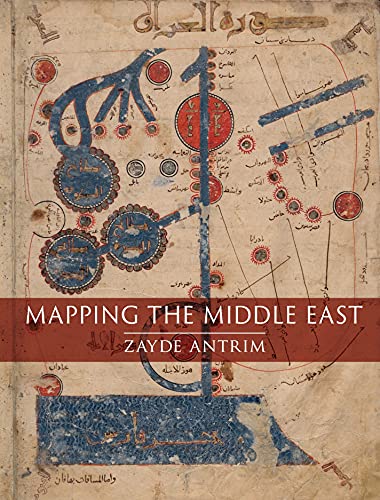
Mapping the Middle East/ Zayde Antrim
Material type: TextPublication details: London; Reaktion Books; 2018Edition: First editionDescription: 331p; 26x20cmISBN:
 - 9781780238500
| Item type | Current library | Collection | Call number | Status | Date due | Barcode |
|---|---|---|---|---|---|---|
 Book
Book
|
SAF Reference Library | Geography. Anthropology. Recreation. | G3180-9980 133.354 (Browse shelf(Opens below)) | Available | 6434 |
Browsing SAF Reference Library shelves, Collection: Geography. Anthropology. Recreation. Close shelf browser (Hides shelf browser)


Mapping the Middle East explores the many ways people have visualized the vast area lying between the Atlantic Ocean and the Oxus and Indus River Valleys over the past millennium. By analyzing maps produced from the eleventh century on, Zayde Antrim emphasizes the deep roots of mapping in a region too often considered unexamined and unchanging before the modern period. As Antrim argues, better-known maps from the nineteenth and twentieth centuries—a period coinciding with European colonialism and the rise of the nation-state—not only obscure this rich past, but also constrain visions for the region’s future. Organized chronologically, Mapping the Middle East addresses the medieval “Realm of Islam;” the sixteenth- to eighteenth-century Ottoman Empire; French and British colonialism through World War I; nationalism in modern Turkey, Iran, and Israel/Palestine; and alternative geographies in the twentieth and twenty-first centuries. Vivid color illustrations throughout allow readers to compare the maps themselves with Antrim’s analysis. Much more than a conventional history of cartography, Mapping the Middle East is an incisive critique of the changing relationship between maps and belonging in a dynamic world region over the past thousand years.
English
There are no comments on this title.