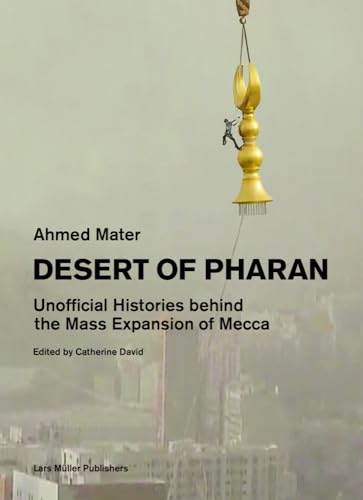
Ahmed Mater, Desert of Pharan: Unofficial Histories behind the Mass Expansion of Mecca/ Edited by Catherine David
Material type: TextPublication details: Lars Muller Publishers; 2016Description: 632p; 26x20cmISBN:
 - 9783037784853
| Item type | Current library | Collection | Call number | Status | Date due | Barcode |
|---|---|---|---|---|---|---|
 Book
Book
|
SAF Reference Library | Visual Arts | NA190-1555.5 132.316 (Browse shelf(Opens below)) | Available | 6189 |
Browsing SAF Reference Library shelves, Collection: Visual Arts Close shelf browser (Hides shelf browser)

|
No cover image available No cover image available |

|

|

|
No cover image available No cover image available | No cover image available No cover image available | ||
| N8700-9165 113.46 Public art: thriving in Karachi's urban chaos/ | N8700-9165 113.47 Optics of a city 2: Karachi/ | N8700-9165 190.753 Marking Beirut- A City revealed through its Graffiti/ | NA190-1555.5 132.316 Ahmed Mater, Desert of Pharan: Unofficial Histories behind the Mass Expansion of Mecca/ | NA190-1555.5 135.405 Modern Architecture: Being the Kahn Lectures for 1930/ | N5198-5299 60.72 Masterpieces of Islamic Art from the Farjam Collection: Volume I | N5198-5299 60.721 Masterpieces of Islamic Art from the Farjam Collection: Volume II |
Through a series of photographs, Ahmed Mater charts the Saudi Arabian city of Mecca’s origins to its more recent history over the last 5 years. It is a study of the site’s recent transformation — Mecca, until recently, embodied a unique urban tapestry, layered with histories that are stitched together by an abundance of organically rooted communities and cultures. It is a place that accommodated not only sacred structures and sites but also huge fluctuations in population during Ramadan (up to 3 million visitors a year travel to Mecca for Eid and Hajj). More recently, these sites and communities have been eradicated and are being replaced with five-star-studded high rise developments, transforming it from an active metropolis to the world’s most exclusive, yet most visited religious tourist destination, reflective of an unprecedented experimentation with architecture and its possible impact on social stratification. This photographic essay is a celebration of Mecca’s real and projected or imaginary states. It provides singular access to this site and its associated social and religious rituals, along with its architectural urban planned and proposed development. Contributors: Catherine David, Ahmed Mater. Interviews of Dr. Sami Angawi and Abdul Rahman Hassanein Makhlouf.
English
There are no comments on this title.