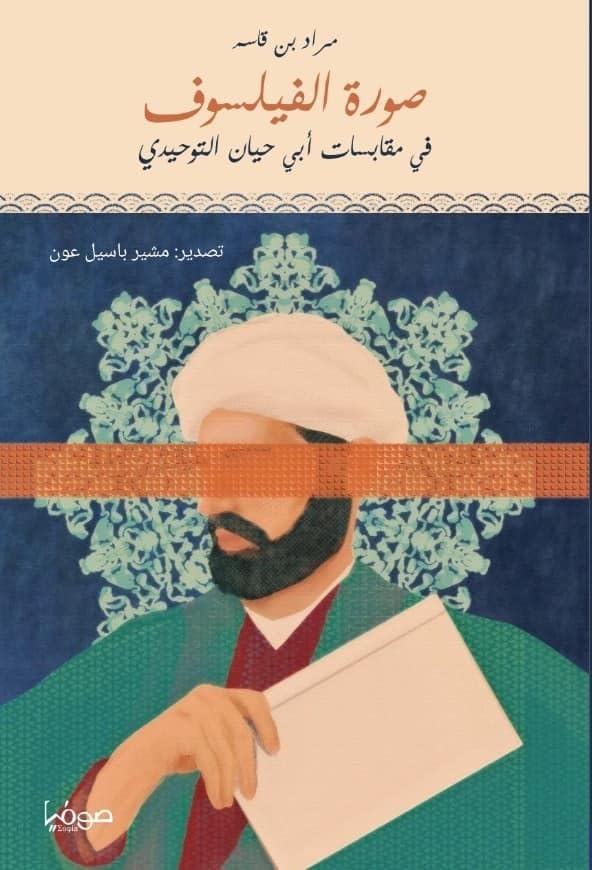
صورة الفيلسوف في مقابسات أبي حيان التوحيدي/ بن قاسم، مراد
Material type: TextPublication details: الكويت؛ دار صوفيا للنشر؛ 2021Description: 265p; 24x17cmISBN:
 - 9789921721560
| Item type | Current library | Collection | Call number | Status | Date due | Barcode |
|---|---|---|---|---|---|---|
 Book
Book
|
Dhaid Library- Shaikh Khalid Palace | Philosophy. Psychology. Religion. | B1-5802 10.158 (Browse shelf(Opens below)) | Available | 5949 |
Browsing Dhaid Library- Shaikh Khalid Palace shelves, Collection: Philosophy. Psychology. Religion. Close shelf browser (Hides shelf browser)

|

|

|

|
||
| B1-5802 10.157 تاريخ فلاسفة الاسلام في المشرق والمغرب/ | B1-5802 10.158 صورة الفيلسوف في مقابسات أبي حيان التوحيدي/ | B1-5802 10.159 فلسفة أبي العلاء مستقاة من شعره/ | B1-5802 10.16 ابن رشد في مرايا الفلسفة الغربية الحديثة/ |
كتاب صورة الفيلسوف في مقابسات أبي حيان التوحيدي للمفكر مراد بن قاسم، يتناول دراسة تأويلية لفكر أبي حيان التوحيدي انطلاقًا من كتابه المقابسات. يعتمد المؤلف فكرة «المقابسات» باعتبارها مجالًا للتفاعل المعرفي الكياني، حيث تُظهر العوز المعرفي والوجودي لدى المتحاورين، فتكون اللقاءات على درجة من التكامل والتنافر معًا. يسعى الكتاب إلى استعادة إرث التوحيدي ليس كتراث جامد، بل كمورد للتجديد والتجربة: تأويلية وفكرية وابتكارية، تكفل أن يهتدي الإنسان والمجتمعات العربية نحو نهضة تنفض عنها آثار العتيق، وتكون الحداثة واعية بذاتها. يتناول المؤلف كيف أن التوحيدي يطرح صورة الفيلسوف — لا كمجدٍ خالص، بل كمنظار نقدي ومعيشة معرفية — وكيف أن الفيلسوف في نظر التوحيدي لا ينفصل عن الواقع، بل هو جزء من المعية الإنسانية الأوسع، مع كل تناقضاتها، ومسؤولياتها، وحدودها.
The Image of the Philosopher in the Muqabasat of Abu Hayyan al-Tawhidi The Philosopher’s Portrait in the ‘Muqābāsāt’ of Abū Ḥayān al-Tawḥīdī, by Murād bin Qāsim is an interpretive study of Abū Ḥayān al-Tawḥīdī's work al-Muqābāsāt. The author frames muqābāsāt (dialogical encounters) as revealing both existential and epistemic lack in those who engage, producing a space of both tension and complementarity. The book seeks to recover Tawḥīdī’s legacy not as static tradition but as a dynamic source of renewal, a source that can guide Arab individuals and societies toward a revival that sheds the dust of antiquity yet embraces modernity with awareness. It shows how Tawḥīdī’s image of the philosopher is not one of aloof superiority but of a thinker embedded in lived reality, engaged with human existence, with its contradictions, responsibilities, and limits, and whose value lies as much in critical reflection as in intellectual prestige.
Arabic
There are no comments on this title.